
January 15, 2024 · 8 min read
Essential Algorithmic Trading Strategies for 2024
Explore the most effective algorithmic trading strategies, from momentum to stat arb, and see how modern quants structure signals, risk, and execution.
Algorithmic trading in 2024 is less about a single “secret strategy” and more about building a robust system: a clean signal pipeline, tight risk controls, and execution that does not leak edge. This guide focuses on the modern stack and the strategies that continue to compound in real markets.
The best strategy is a boring, repeatable process that survives bad regimes.

1. Momentum, Still the Workhorse
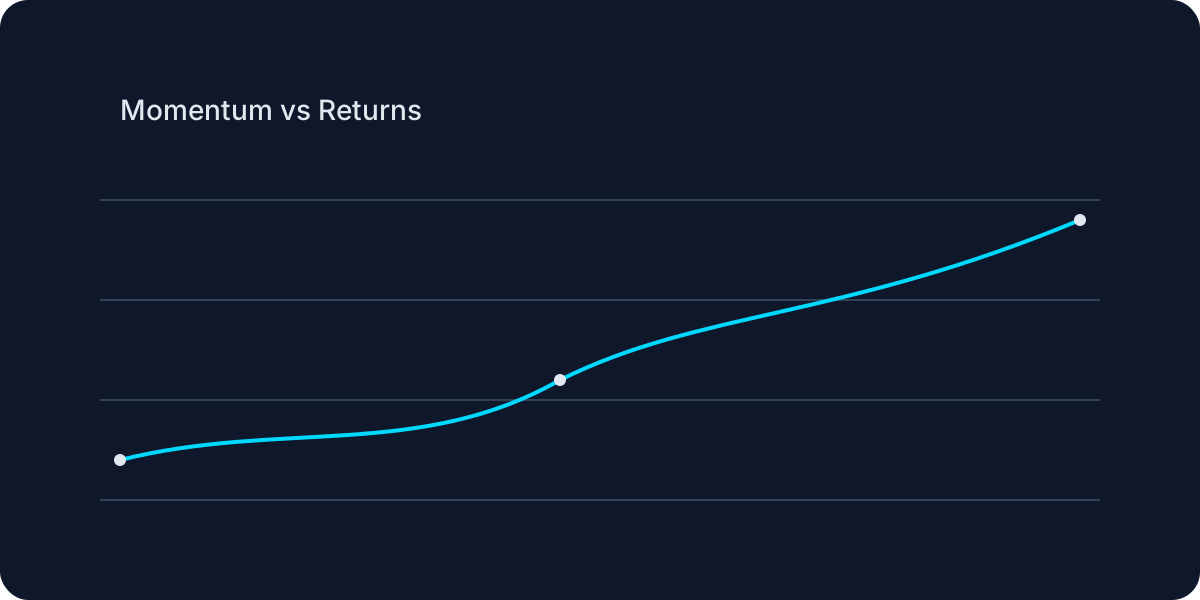
Momentum remains resilient because it captures persistent behavioral and structural trends. In production systems, the difference is stability:
- Multi-horizon signals (short, medium, long) to reduce regime sensitivity
- Volatility-adjusted position sizing
- Slippage-aware execution to protect edge
2. Statistical Arbitrage: From Theory to Reality
Stat arb today is a data engineering problem. You need rapid updates to correlation structure and the discipline to reduce exposure when dispersion collapses.
def zscore(prices: list[float]) -> float:
    mean = sum(prices) / len(prices)
    variance = sum((p - mean) ** 2 for p in prices) / len(prices)
    std = variance ** 0.5
    return (prices[-1] - mean) / std
Practical rule: if correlation drops or borrow costs spike, exit early. You are trading a relationship, not a price.
3. Risk: The Strategy You Actually Trade
The fastest way to kill a good signal is to size it poorly. A professional system implements risk limits first, then seeks alpha.
| Control | Purpose | Common Mistake |
|---|---|---|
| Max drawdown | Protect capital | Too high, never enforced |
| Position cap | Avoid concentration | Ignoring correlated bets |
| Volatility targeting | Stabilize returns | Using stale vol estimates |
4. Execution: Small Edges, Large Impact
Execution matters. If you expect 20–40 bps of edge, a sloppy fill can erase the entire strategy.
- Simulate with realistic spreads and market impact
- Use limit orders where possible
- Avoid crowded times unless the signal demands it
Conclusion
Modern algorithmic trading is a system design challenge. Build a clean pipeline, demand discipline in risk, and treat execution as a first-class citizen.
Ready to go deeper? Explore the Provectus Quantus platform to prototype and backtest strategies with institutional-grade tooling.
References
- Advances in Financial Machine Learning — Wiley
- Fama-French Data Library — Dartmouth
- Alpaca Market Data Docs — Alpaca