
January 10, 2024 · 10 min read
Building Smart Portfolio Automation Workflows
A practical blueprint for building portfolio automation pipelines that scale: data ingestion, signal layers, risk controls, and execution.
Portfolio automation is no longer just quarterly rebalancing. The best systems run continuously, with clear guardrails and human-grade reporting. This article outlines a clean, modular workflow you can extend without rewriting the core.

Architecture: Four Layers That Scale
- Data ingestion — prices, fundamentals, macro signals
- Signal layer — rules, ML models, or regime classifiers
- Risk & allocation — constraints, volatility targeting, caps
- Execution — orders, routing, slippage controls
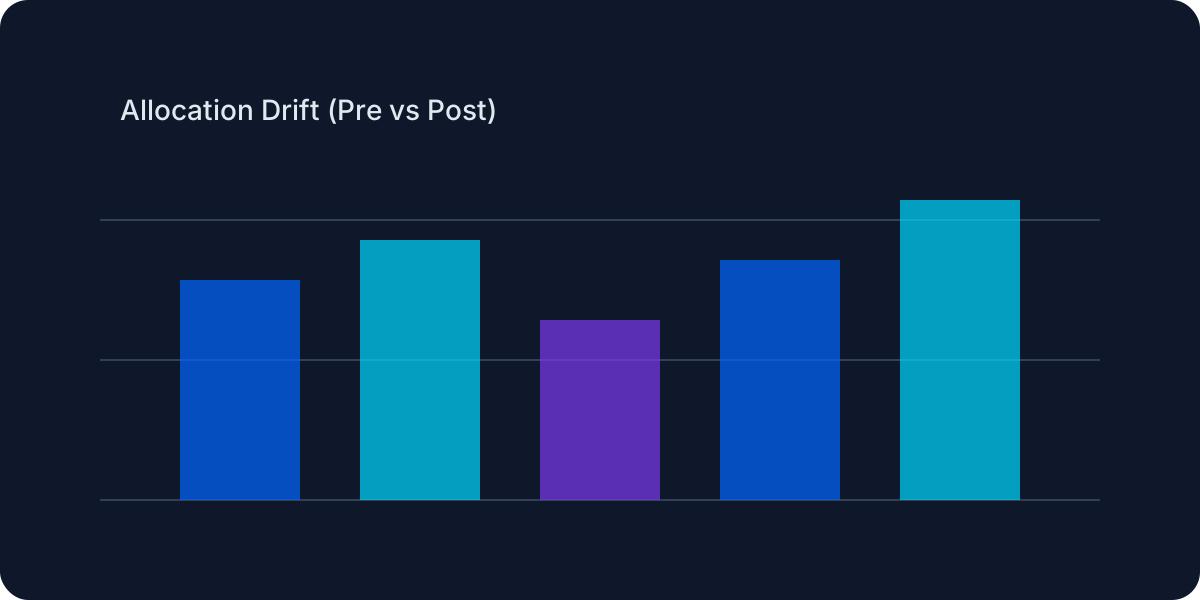
A Practical Automation Loop
def rebalance_portfolio(state):
    data = ingest_market_data(state)
    signals = generate_signals(data)
    target_allocs = optimize_allocations(signals, risk_budget=0.08)
    orders = plan_orders(state.positions, target_allocs)
    execute_orders(orders)
Monitoring Is Not Optional
Automations need constant visibility to avoid slow drift:
- Daily performance and drawdown reports
- Error budgets for data and execution
- Human override during anomalies
Common Pitfalls
| Pitfall | Cost | Prevention |
|---|---|---|
| Overfitting | Fragile signals | Simple baselines first |
| Ignoring costs | Phantom alpha | Model fees + slippage |
| Silent failures | Unbounded risk | Hard alerts + kill switch |
Conclusion
If your automation is hard to explain, it is hard to trust. Keep the core simple, instrument every step, and build in brakes.
Explore Provectus Quantus for building modular portfolio automation with clean auditing and execution controls.
References
- Modern Portfolio Theory — CFA Institute
- Ibbotson SBBI Classic Yearbook — Oxford University Press
- Alpaca Trading API Docs — Alpaca